The Practitioner
A Practice Built on Listening First
Vibha Jain is a regression therapist and hypnotherapist working in Mumbai. Over more than fifteen years and 2,400+ sessions, her practice has been shaped by a single conviction: that the person in the room already holds their own material, and the practitioner's task is to create conditions steady enough for it to be looked at safely.

Experience, Held Lightly
Numbers are a rough measure of anything therapeutic. What sustained experience genuinely offers is not certainty but calibration — a practical sense of how differently people respond, how varied a session can look, and how often the most useful moment is the one where nothing dramatic happens at all.
Fifteen years of practice has largely taught restraint: fewer assumptions, slower pacing, more checking, and a firm resistance to interpreting on a client's behalf. A practitioner who has met several thousand different responses is less likely to expect a particular one, and more likely to make room for whatever actually arrives.
It also brings a clearer sense of limits. Part of responsible practice is recognising when regression work is not the right approach for someone, when a conversation should end without proceeding further, and when a person would be better served by medical or psychological support instead of, or alongside, therapeutic exploration.
The Approach
A Client-Centred Way of Working
“Client-centred” is used carefully here. It does not mean that the practitioner has no structure or direction. It means that the direction is set by what the client brings, and that the client's own account of their experience is treated as the most reliable source of information in the room.
Listening as method, not courtesy
A first conversation is not a formality before the “real” work. It is where the shape of the work is decided. How someone describes a difficulty — the words they reach for, what they skip past, where their voice changes — carries as much information as the difficulty itself. That listening continues throughout: during exploration, the practitioner's role is largely to stay attentive and to ask open questions rather than to supply interpretations.
No suggested storylines
One of the clearest ethical requirements in regression work is that the practitioner must not lead a client towards a particular narrative. Questions are deliberately open. If a person reports uncertainty, that uncertainty is recorded as it is, rather than smoothed into a cleaner account. Nothing that emerges is treated as established fact, and nothing is interpreted as evidence about other people or events.
The pace belongs to the client
Depth is not a goal in itself. Some sessions stay entirely in conversation. Some involve relaxation with very little exploration. Some go further. A person can slow down, redirect, open their eyes, ask a question or end the session at any moment, and doing so is treated as useful information rather than as a failure of the process.
Understanding rather than conclusions
Sessions aim at awareness — recognising a response, seeing where it may have formed, and noticing how it operates now. They do not aim at producing a definitive explanation for a person's difficulties. Explanations that feel too neat are usually worth holding loosely.
If a client leaves with a tidy story they did not arrive with, the work has probably gone wrong. If they leave with a better question, it has usually gone right.
Working Principles
Five Commitments That Shape Every Session
These are the working standards the practice holds itself to. They are stated plainly so that anyone considering a session knows what to expect — and knows what to hold the practitioner to.
-
Consent
Informed, ongoing and revocable
Consent is not a form signed once. It is checked as the session develops, because a person's willingness to continue can legitimately change as material becomes more emotionally present. Withdrawing consent mid-session is always available and never treated as a problem.
-
Clarity
Honest about what this is and is not
No guarantees are offered, no outcomes are promised, and no claims are made about curing, treating or diagnosing anything. Where a person's expectations do not match what regression work can reasonably offer, that is said directly before proceeding.
-
Confidentiality
What is said in the room stays there
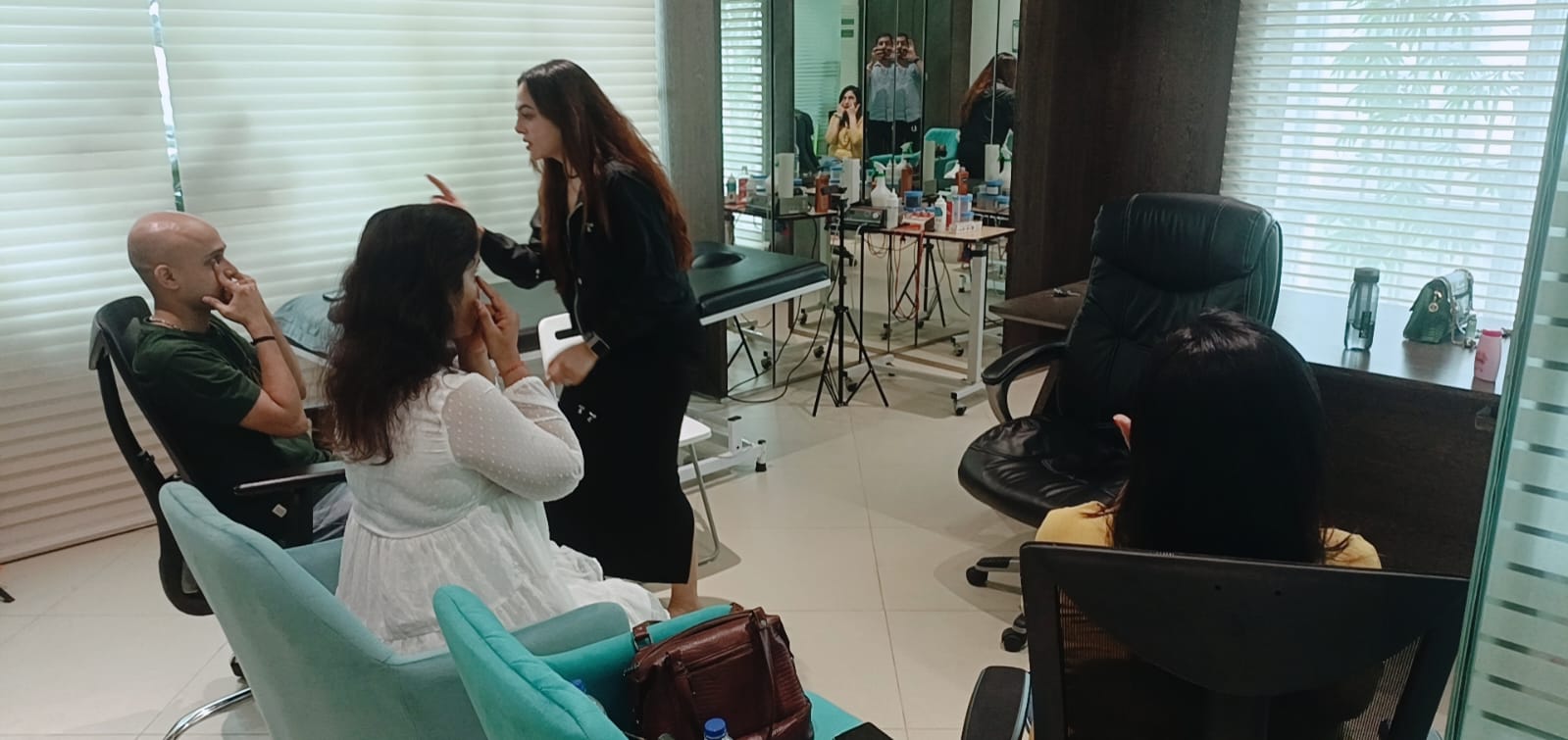
Sessions are private. Material discussed is not shared, and no client account, image or experience appears on this website. The photographs used here are of group and practice settings, with client identity protected.
-
Restraint
Following, never leading
The practitioner does not supply content, suggest what a client “must have” experienced, or convert a subjective impression into a factual claim about the past. Open questions are used precisely because they leave the material to the client.
-
Referral
Knowing when this is not the right room
Where a person's needs indicate medical or mental-health assessment, that is said clearly and the conversation is redirected. Complementary work only makes sense when appropriate professional care is already in place.
The Environment
What Clients Can Expect in the Room
The physical and emotional environment of a session does a large part of the work. People explore more honestly when they are warm, physically comfortable, unhurried and confident that nothing will happen without their agreement.
Unhurried timing
Sessions are not run to a stopwatch. Time is allowed for settling at the start and returning at the end.
Plain language
The approach is explained without jargon or mystique. Questions are welcomed at any point.
Physical comfort
Seating or reclining, lighting and temperature are adjusted first. Discomfort makes reflection harder.
No performance expected
There is no correct experience to produce. Noticing very little is a valid and common outcome.
Emotion is allowed
If feeling arises, there is space for it. Nothing needs to be managed or apologised for.
A clear ending
Every session closes with an intentional return to the present and a conversation about what was noticed.
On comfort, consent and readiness
Readiness matters more than willingness. Someone can want to explore something and still not be in a position to do so — because of what is happening in their life that week, because of tiredness, or because the support around them is thin. Where that is the case, the honest response is to wait, or to suggest a different form of support, rather than to proceed because an appointment exists.
Where the Work Happens
Individual Sessions and Group Settings
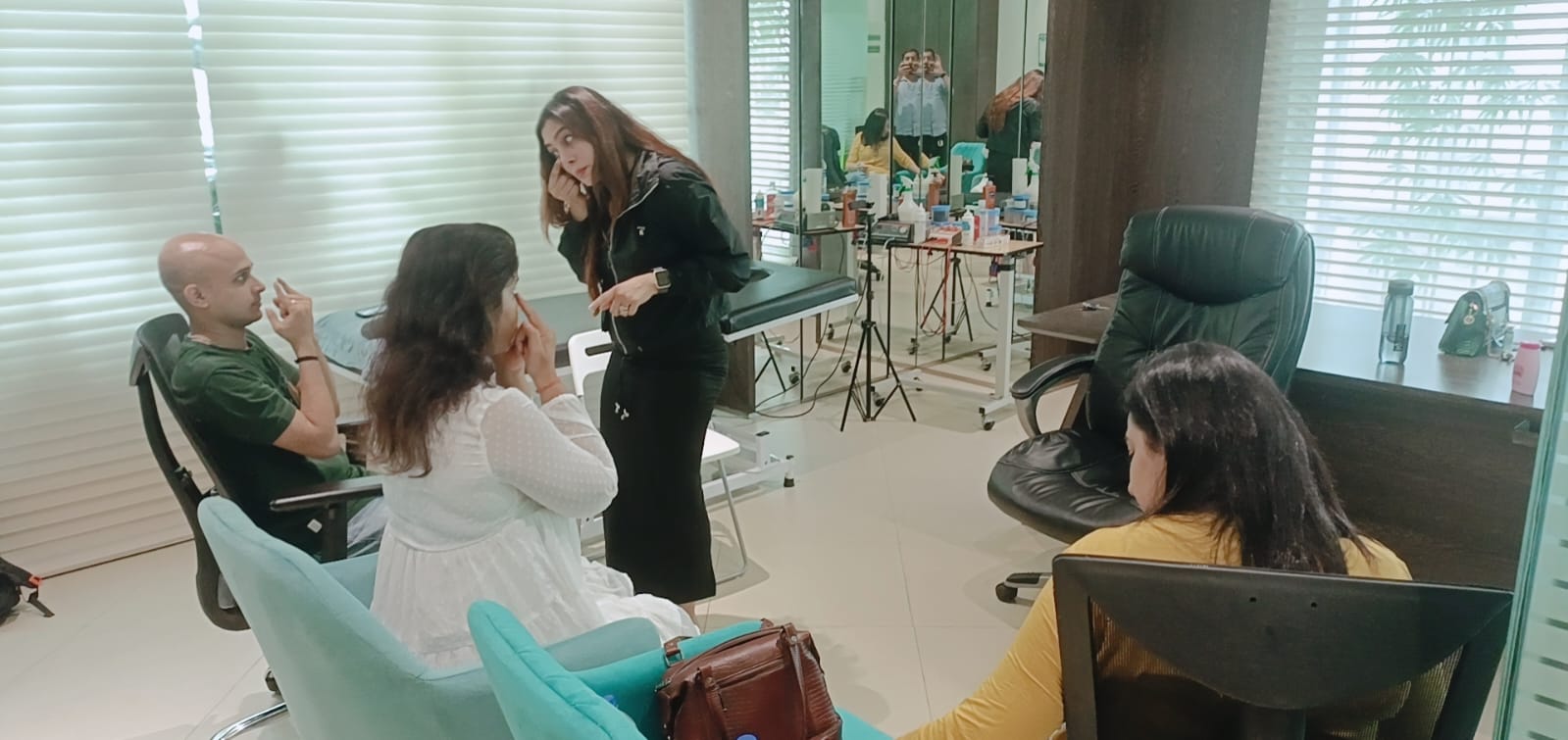
Alongside private consultations, Vibha has conducted group workshops and introductory sessions on relaxation and self-awareness. Group settings are used for explanation and shared relaxation exercises; personal exploration remains private work.

Two settings, one standard
Whether the room holds one person or twenty, the same rules apply: the approach is explained first, participation is voluntary, nobody is singled out, and no one is expected to share anything personal in front of others.
Group sessions can be a useful, low-pressure way to understand what guided relaxation actually feels like before deciding whether individual regression work is of interest. They are educational in nature and are not a form of treatment.
- Participation is always optional, including within an exercise
- No personal disclosure is asked for in a group setting
- Individual exploration is offered privately, never in front of a group
What this practice does not claim
Regression therapy and hypnotherapy as offered here are complementary approaches to self-understanding. This practice does not claim to diagnose, treat, cure or prevent any medical or psychological condition, does not promise particular results, and does not present material that emerges during a session as verified historical fact.
No testimonials, ratings, success rates or client case histories are published on this site, because presenting individual therapeutic experience as evidence would be misleading. If you are living with a diagnosed condition or are under the care of a doctor or mental-health professional, please discuss any complementary approach with them before beginning.
If you are in crisis or at risk of harming yourself, please contact emergency services or a qualified medical professional immediately. This website cannot provide urgent or crisis support.
Continue Reading
Where to Go From Here
Talk It Through First
A short conversation is usually enough to tell whether regression therapy is worth exploring for what you are carrying. There is no obligation, and no pressure to book anything.