
Transparency
What to Expect in a Session
Uncertainty is the most common reason people hesitate. This page therefore describes a session as plainly as possible — including the parts that are ordinary, the parts that vary, and the parts that may not happen at all.
Nothing here is promised as an outcome. It is a description of a process, not a prediction of your experience of it.
Phase One
Before the Session
Very little is required of you beforehand. What follows is simply what tends to make the hour more useful.
No special preparation
You do not need to research the approach, rehearse an account, or arrive in any particular frame of mind. Scepticism is not an obstacle.
Eat something ordinary
Arriving hungry or immediately after a heavy meal both make settling harder. Something light beforehand is ideal.
Comfortable clothing
You will be sitting or reclining for a while. Wear something you will not need to adjust or think about.
Allow travel time
Arriving rushed costs the first part of the session. In Mumbai, allowing generous margins is simply realistic.
Note your questions
Anything you want to ask — about the approach, the limits, confidentiality — is easier to raise if it is written down.
Keep afterwards light
Where possible, avoid scheduling something demanding immediately after. Reflection needs a little room.
Phase Two
The Initial Discussion, Intentions and Consent
The session opens in ordinary conversation and stays there for as long as it needs to. This is not preamble; it is where the session is shaped.
Describing what brings you
You describe, in your own words, what you would like to understand. It does not need to be organised or articulate. Hesitation, contradiction and “I'm not sure how to put this” are all perfectly workable starting points.
Setting an intention
Rather than a goal, an intention is a direction — a sense of what you would find useful to look at. Intentions are held loosely. If exploration moves somewhere unexpected, that is followed rather than corrected back to plan.
Comfort and consent
Practical comfort is settled first: seating or reclining, position, lighting, temperature. Then the approach is explained again in plain language, and consent is confirmed explicitly. You are told clearly that you can pause, ask questions, open your eyes or end the session at any time — and that doing so is entirely normal.
Consent is checked as the session develops, not just at the start. What felt manageable at the beginning may feel different once something becomes emotionally present, and changing your mind at that point is treated as good judgement.
“Before we go any further — are you comfortable continuing with this, or would you rather we stayed with the conversation today?” A question of that kind may be asked more than once in a session, and either answer is equally acceptable.
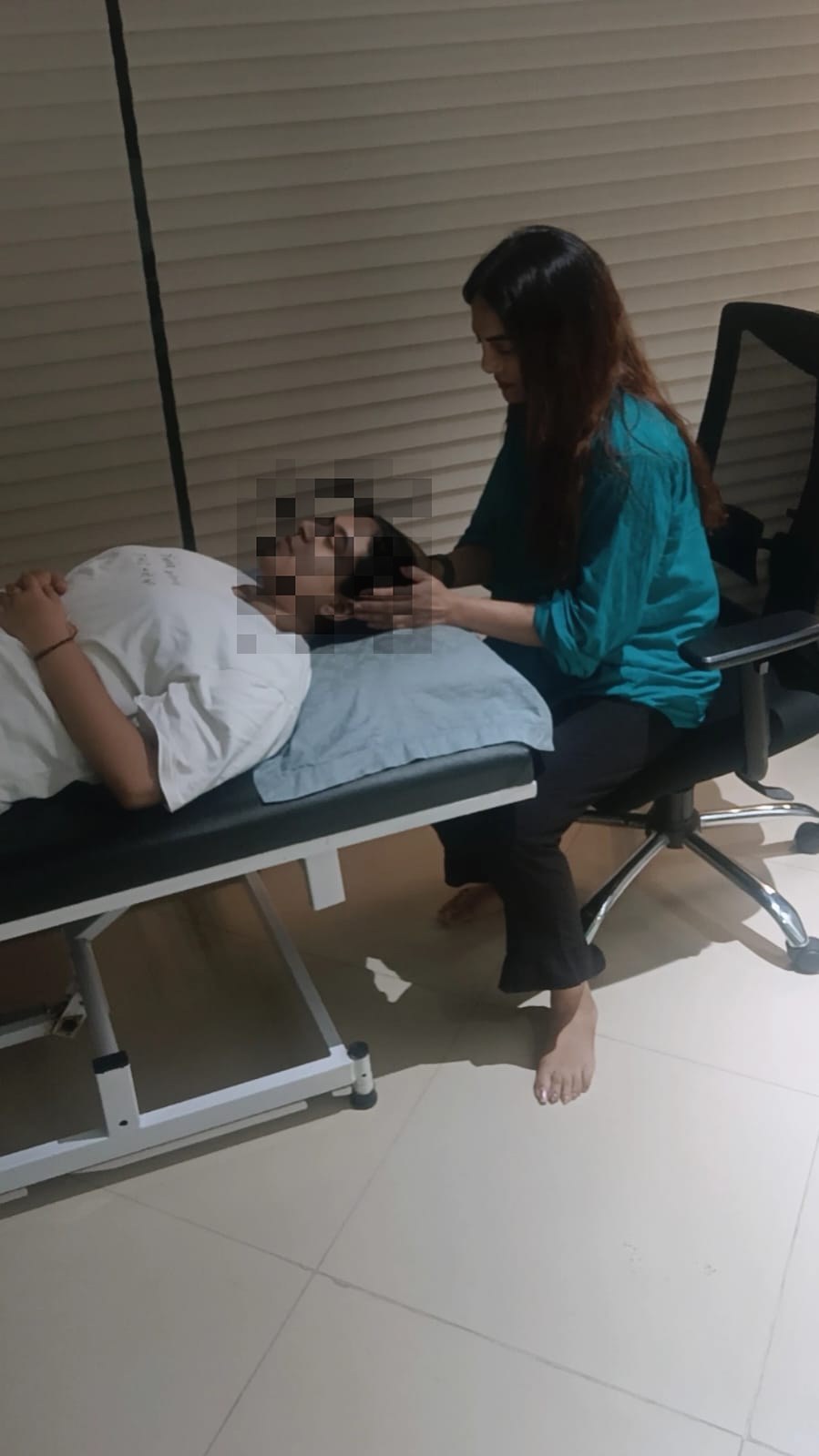
Phase Three
Guided Relaxation and the Exploration Process
The part most people are curious about — and, for most people, the part that turns out to be far less dramatic than expected.
How relaxation is introduced
Gradually, and through ordinary means: attention to your breathing, to the weight of your body against the chair, to releasing tension you may not have noticed you were holding. The guiding voice stays even and unhurried. There is no theatrical technique, no countdown, and nothing designed to disorient you.
You remain aware throughout. You will hear the room. You may notice traffic outside, or your own thoughts wandering. None of that means it is not working — attention wanders in every session, for everyone, and is simply brought back without comment.
What the exploration involves
Once settled, you are invited to turn attention towards whatever you identified earlier. The questions are open by design: what you notice, what is present, what the feeling is like, whether anything comes with it. You answer aloud, in your own words. Nothing is suggested to you, and no detail is supplied by the practitioner.
The pace is deliberately slow. Silence is allowed. Staying with one small detail is often more productive than covering a great deal quickly.
Emotional responses
Emotion may arise. It may not. Both are entirely normal, and neither indicates that a session is going well or badly. If feeling does come, there is room for it — you do not need to manage it, explain it or apologise for it.
If intensity rises, the response is always to slow down. Attention is brought back to the present — the chair, the breath, the room — before anything continues. Grounding takes priority over exploration, every time. The aim is understanding, not intensity, and there is no therapeutic value in pushing someone beyond what they are ready for.
Ending and reflection
Time is always reserved to come back properly. Attention is guided gently to the present, with a pause before conversation resumes. A session is never allowed to simply run out of time in the middle of something.
You then talk about what you noticed. The practitioner helps you articulate your own sense of it rather than supplying an interpretation. Where meaning is unclear, it is left unclear — premature conclusions are less useful than an open question you can sit with.
Anything that surfaces during exploration is treated as your subjective experience. It is not treated as verified historical fact, is not used to make claims about past events or other people, and should not be used as a basis for accusation, confrontation or legal action. Human memory is reconstructive, and vividness is not a measure of accuracy.
The Most Important Point on This Page
Every Experience Is Individual
There is no standard regression experience, and there is no correct one. What people describe varies so widely that comparing your session to anyone else's account — including anything you have read online — is almost guaranteed to mislead you.
Some people experience vivid imagery
Detailed scenes, faces, rooms, colours — sometimes with a strong sense of being present in them. This is what popular accounts tend to describe, which is why it is often mistaken for the norm.
Others notice feeling or sensation
No pictures at all, but a distinct emotional tone, a bodily sensation, a sense of an age or a time of life. This is at least as common and just as workable.
Others notice very little
A pleasant, quiet period of relaxation with nothing particular emerging. This is a genuinely normal outcome, and it does not mean anything is wrong with you or with the process.
What varies from person to person
- Depth of relaxation — from lightly settled to deeply relaxed
- Type of material — imagery, emotion, sensation, words, or none
- Emotional intensity — from matter-of-fact to genuinely moving
- How much is spoken — some describe continuously, others say very little
- Where understanding arrives — during the session, days later, or not at all
- How many conversations are needed — sometimes one, often more, sometimes none
What does not vary
- You remain aware and in control throughout
- You can pause, redirect or stop at any moment
- Nothing is suggested, implied or supplied to you
- Grounding always takes priority over continuing
- The session ends with a deliberate return and reflection
- No outcome is promised, implied or guaranteed
If you find yourself measuring your experience against someone else's, it is worth saying so during the session. That expectation is itself worth exploring.
Phase Four
After the Session
Attention does not switch off cleanly when a session ends. These are commonly described experiences in the hours and days afterwards.
-
Tiredness or flatness
Sustained inward attention is genuinely tiring. Feeling drained or quiet afterwards is common and generally passes within a day.
-
Delayed connections
Understanding frequently arrives later — while walking, commuting or falling asleep — rather than in the room itself.
-
An emotional aftertaste
A lingering mood is not unusual, particularly if the session touched something with weight. It usually settles over a day or two.
-
Changes in sleep or dreaming
Some people report more vivid or memorable dreams for a night or two. This is commonly described and is not a cause for concern in itself.
-
Nothing noticeable at all
Equally common, and not an indication that the session lacked value. Some things settle quietly.
Simple aftercare
- Keep the following hours undemanding where you can
- Drink water; eat something ordinary
- Avoid significant decisions immediately afterwards
- Note anything that surfaces later, without over-analysing it
- Allow a few days before deciding what the session meant
- Get in touch if something is troubling you afterwards

Judge a session after a week, not after an hour. What seemed uneventful at the time is often the part that stays.
An Essential Section
When to Seek Medical, Psychological or Psychiatric Support
Regression therapy is a complementary approach to self-understanding. It is not healthcare, and there are circumstances in which qualified professional support is the appropriate response — either instead of exploratory work, or alongside it.
Please contact a doctor or qualified mental-health professional if you are experiencing
- Thoughts of harming yourself or someone else
- Distress that is severe, persistent or worsening
- An inability to manage daily activities, work or relationships
- Significant changes in sleep, appetite, mood or concentration
- Experiences that feel frightening, confusing or unlike yourself
- Difficulties involving alcohol or substance use
- Any physical symptom that concerns you
In an emergency, or if there is immediate risk to anyone's safety, contact your local emergency services or go to the nearest hospital. This website and this practice cannot provide urgent or crisis support.
If you are already receiving care
That is not a barrier to exploratory work, but it does need to be discussed. Please tell the professional treating you that you are considering a complementary approach, and please mention any diagnosis or medication when you get in touch here, so that suitability can be considered properly.
Nothing in a session should ever lead you to alter, reduce or discontinue prescribed treatment. Any decision of that kind belongs with the professional who prescribed it.
If a session raises something difficult
Occasionally exploration brings up material that would be better supported by a qualified mental-health professional. Where that becomes apparent, it will be said clearly, and the appropriate suggestion will be to seek that support rather than to continue.
Recognising a limit is part of practising responsibly, not a failure of the approach.
Continue
Related Pages
Any Question Is Reasonable Before You Begin
If something on this page raised a concern, ask it. Nothing about a first conversation commits you to anything.