The Process
How Regression Therapy Works
A session is not a mysterious event. It has a shape, and knowing the shape in advance tends to make the experience easier. Below is the sequence a session typically follows — six stages, from the first ordinary conversation to the reflection that closes the hour.
- 01 — Initial Conversation
- 02 — Understanding Concerns
- 03 — Preparation & Comfort
- 04 — Guided Relaxation
- 05 — Focused Exploration
- 06 — Reflection & Integration

Structure Is What Makes Openness Possible
People sometimes assume that structure and depth are opposites — that a session which follows a clear sequence must be shallow. In practice the reverse tends to hold. When someone knows what is going to happen, when it will stop, and that they can change their mind at any point, they have far less to manage and far more attention available.
The six stages below are a description, not a script. Their proportions vary greatly. A first session may be almost entirely stages one to three, with relaxation introduced only briefly at the end, or not at all. That is a perfectly reasonable outcome and not a session that has failed.
What does not vary is the order of principle: nothing is explored before it has been explained; nothing proceeds without agreement; nothing is left unfinished at the end.
The Six Stages
From First Conversation to Reflection
Scroll through the sequence below. Each stage describes what actually happens, what is asked of you, and what you can expect from the practitioner.
-
Stage One
Initial Conversation
The session opens with ordinary talk. You describe what brings you — a feeling, a situation, a pattern you have noticed, or sometimes only a vague sense that something keeps happening. It does not need to be well-formulated. A large part of the practitioner's work at this point is listening for what is difficult to say as much as for what is said easily.
Practical matters are covered here too: how long the session will run, what will and will not happen, how confidentiality works, and the fact that you can stop at any moment. If you have questions, this is the natural place for them, and there is no such thing as a question too basic to ask.
What is asked of you: only that you speak honestly, at whatever level of detail you are comfortable with.
-
Stage Two
Understanding the Client's Concerns
The conversation then narrows. Rather than trying to cover a whole life history, attention settles on one thread — the response you would most like to understand, or the situation in which it most reliably appears. Specificity helps. “I go blank whenever I have to disagree with someone senior” gives exploration somewhere to begin in a way that “I lack confidence” does not.
Expectations are discussed openly at this stage. If what you are hoping for is something regression work cannot reasonably offer — certainty about a past event, a guaranteed resolution, or treatment for a diagnosed condition — that is said plainly now rather than discovered later. Boundaries are also agreed: subjects you would prefer not to approach are noted and respected.
What you can expect: honesty about fit, including the possibility that this is not the right approach for you at present.
-
Stage Three
Preparation and Comfort
Before anything else, the practical environment is settled. Seating or reclining position, lighting, temperature, whether shoes stay on, where to put your hands, what to do if you need to cough or shift position — small things, but discomfort is a genuine obstacle to reflection, and having to endure it silently is worse.
The approach itself is then explained once more in plain language: what relaxation will feel like, that you will remain aware, that you can speak at any point, that you can open your eyes, and that ending the exploration requires nothing more than saying so. Consent is confirmed explicitly before proceeding — not assumed from the fact that you booked.
The principle: nothing begins until you have said, in your own words, that you are ready for it to begin.
-
Stage Four
Guided Relaxation
Relaxation is introduced gradually — usually through attention to breathing, to the weight of the body against the chair, and to a slow release of muscular tension. The voice guiding you stays steady and unhurried. There is no countdown drama, no theatrical technique, and nothing designed to overwhelm.
People experience this stage very differently. Some describe a pleasant heaviness; some feel unusually alert; some remain entirely conscious of traffic outside and are surprised to find that it does not interfere. Depth is not a competition. If your attention wanders, that is normal and is simply brought back without comment.
Throughout, you retain full control. If you want to slow down, adjust position, or return fully to ordinary awareness, you say so and it happens.
Common misconception: this stage is not sleep, is not unconsciousness, and does not make anyone compliant.
-
Stage Five
Focused Exploration
Once settled, attention is invited towards the thread identified earlier. The questions are deliberately open — what you notice, what is present, what the feeling is like, whether anything comes with it. They are open because leading questions can shape what a person experiences, and material that has been shaped by the practitioner is of no therapeutic use.
What arrives varies enormously. Some people describe detailed scenes. Others notice a bodily sensation, a mood, a colour, an age, a single sentence, or a strong sense of a place without any picture. Some notice very little. Every one of these is workable material, and none of them is the “correct” response.
You speak throughout, in your own words, and you remain able to stop. If something becomes emotionally strong, the pace slows immediately; grounding takes priority over continuing. The aim is understanding, not intensity — there is no therapeutic value in pushing someone further than they are ready to go.
Handled with care: nothing that emerges is treated as verified historical fact, only as your subjective experience.
-
Stage Six
Reflection and Integration
Time is always reserved for the ending. Attention is guided gently back to the room — the chair, the sounds, the light — and there is a deliberate pause before conversation resumes. Sessions are never allowed to simply run out of time mid-exploration.
Then you talk. What did you notice? Did anything surprise you? Does anything connect with what you described at the start? The practitioner's role here is to help you articulate your own sense of it, not to hand you an interpretation. Where meaning is uncertain, it stays uncertain — premature conclusions are less useful than open questions.
Finally, aftercare: what to expect in the hours afterwards, why you may feel tired or reflective, and the suggestion to keep the rest of the day undemanding where possible. Whether a further session would be useful is discussed honestly, including the possibility that it would not.
Never skipped: the return and the reflection are part of the session, not an optional extra.
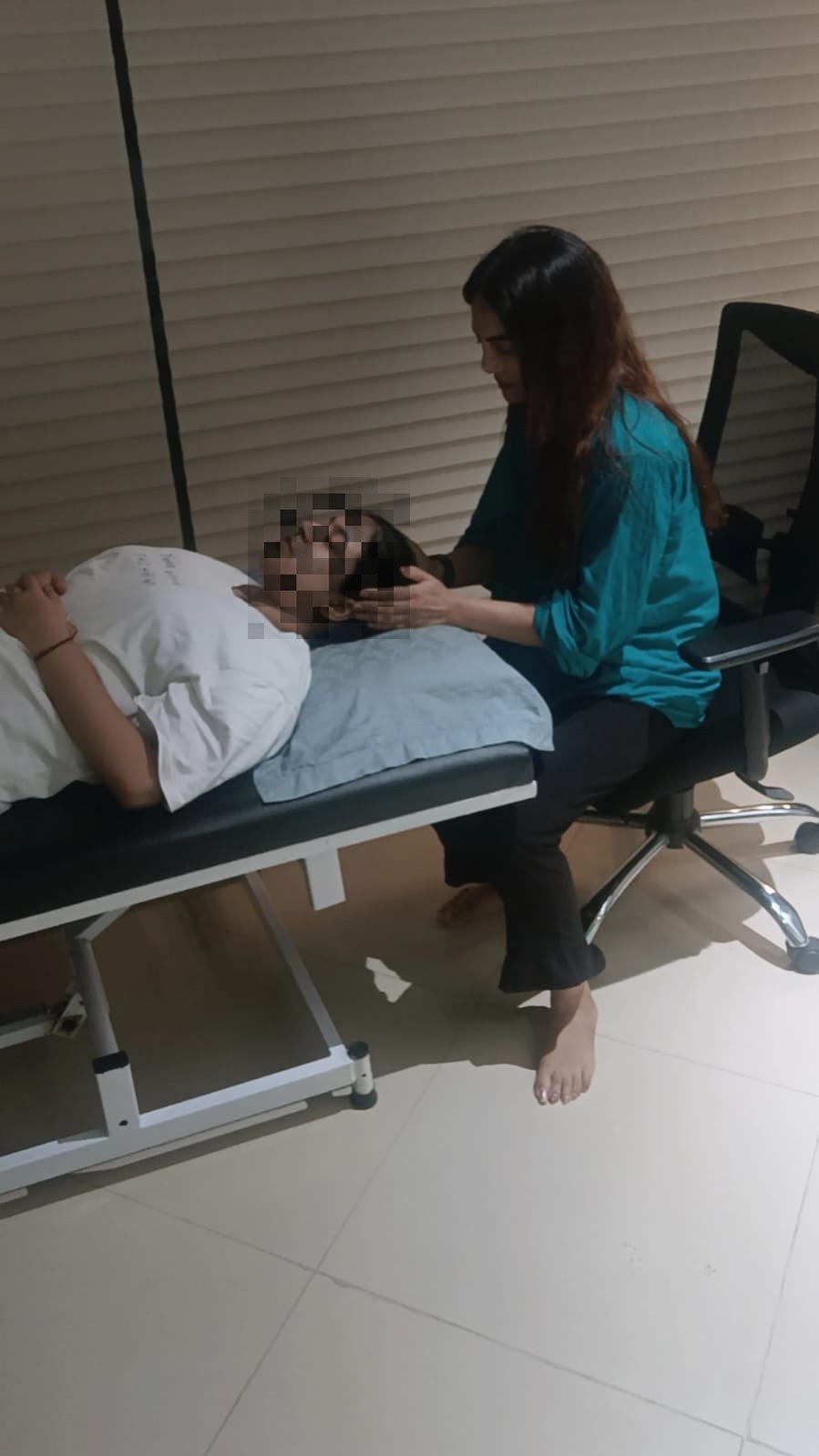
In Practice
Every Session Is Individual
The six stages describe a structure, not an experience. Two people moving through exactly the same sequence may have almost nothing in common in what they notice, how deeply they relax, how much they say, or what they take away.
This is worth emphasising because expectation shapes experience. Arriving convinced that a session must produce vivid recall can make an ordinary, quiet, useful session feel like a disappointment. Arriving without expectations usually works better.
- Depth varies. Light relaxation is as legitimate as deep relaxation.
- Content varies. Images, feelings, sensations, words, or comparatively little.
- Emotion varies. Some sessions are moving; many are quite matter-of-fact.
- Pace varies. Some people need several conversations before exploration feels right.
- Outcome varies. Understanding may arrive during the session, days later, or not at all.
After the Hour
What Tends to Happen Afterwards
The session ends, but attention does not switch off cleanly. These are commonly described experiences in the hours and days that follow — offered so that nothing feels alarming or unexpected.
Tiredness
Sustained inward attention takes effort. Feeling flat or sleepy afterwards is common and passes.
Delayed connections
Understanding often arrives later — while walking, driving or falling asleep — rather than in the room.
Emotional aftertaste
A lingering mood is not unusual. It generally settles within a day or two.
Vivid dreaming
Some people report more memorable dreams for a night or two afterwards.
Nothing much at all
Equally common. An uneventful aftermath does not mean the session was without value.
A wish to talk
Some find it useful to write privately; others prefer to leave it and let it settle.
If distress after a session is significant or does not settle, please contact your doctor or a qualified mental-health professional. You are also welcome to get in touch to discuss it.

Practical aftercare
- Keep the hours afterwards undemanding where you can
- Drink water and eat something ordinary
- Avoid making significant decisions immediately afterwards
- Note anything that surfaces later, without analysing it
- Allow a few days before judging what the session meant
Where This Process Is Not the Right One
A structured session cannot be made suitable for every situation simply by pacing it carefully. Regression therapy is a complementary approach, not a treatment, and there are circumstances in which medical or psychological support should come first — or instead.
Please speak with a doctor or qualified mental-health professional if you are in significant distress, if you are experiencing thoughts of harming yourself or others, if you are managing a diagnosed condition, or if you are unsure whether exploratory work is appropriate for you at this time. Where you are already receiving care, discuss any complementary approach with the professional supporting you before beginning.
No stage described on this page diagnoses, treats or cures anything, and no outcome is promised at any point in the sequence.
Still Deciding Whether to Begin?
That is a reasonable place to be. A short conversation costs nothing and often clarifies more than another hour of reading.